H. ‘Abiqua Elephant Ears’
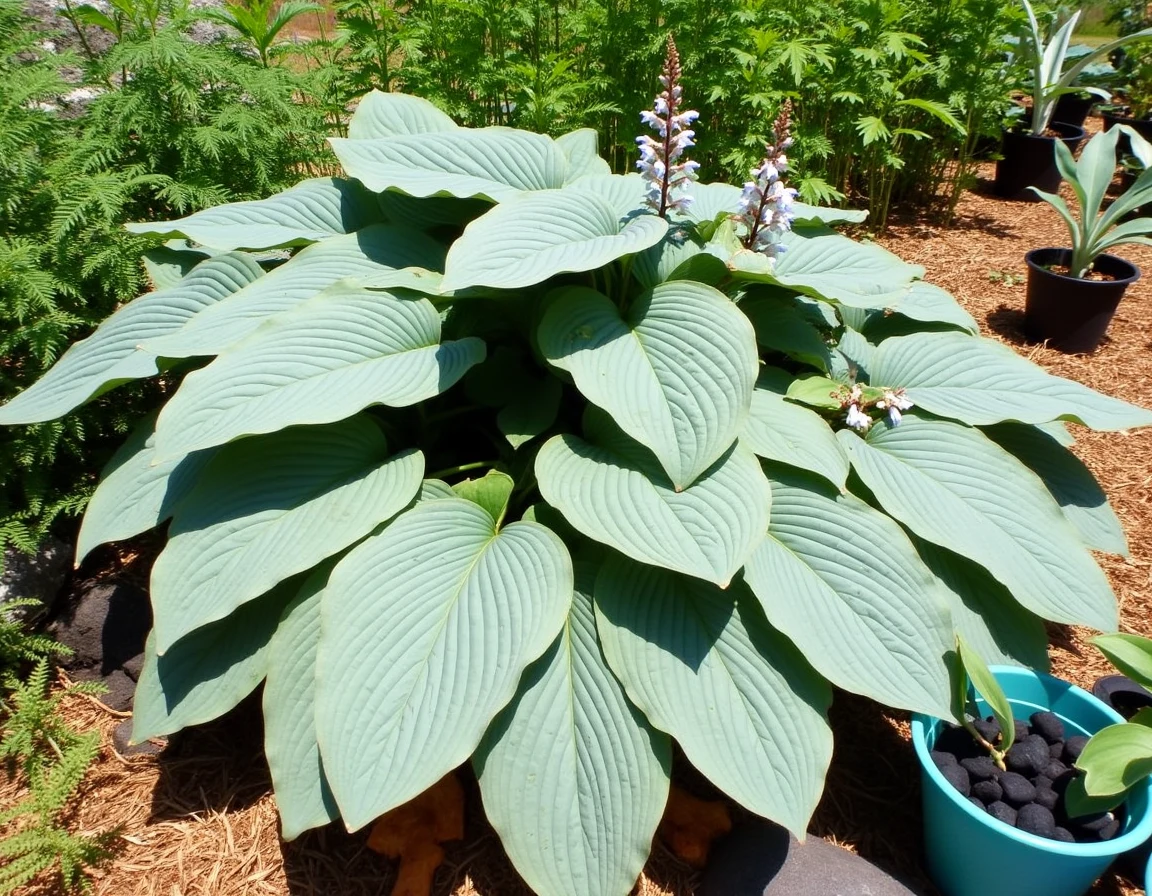
Watercolor adaptation by The Hosta Farm; this adaptation is also licensed CC BY-SA 4.0.
Hosta ‘Abiqua Elephant Ears’ is a registered cultivar () .
| Year registered | 1999 |
|---|---|
| Section class | I-2 |
Overview
*Hosta* 'Abiqua Elephant Ears' is a giant hosta cultivar registered in 1999, originating as a hybrid from a seedling of *Hosta sieboldiana*. It is distinguished by its exceptionally large, heavily textured blue-green leaves, which reach up to 17 inches in length and 11.5 inches in width, forming a substantial mound 60 inches in diameter and 30 inches in height. The cultivar is notable for its prominent cordate leaf bases and 13 to 14 pairs of veins per leaf.
In the Garden
This cultivar performs best in partial to full shade, where its blue-green foliage develops a pronounced glaucous bloom on both the upper and lower leaf surfaces. The large, corrugated leaves create a bold textural contrast when planted alongside finer-leaved perennials such as ferns, *Heuchera*, or *Pulmonaria*. Its massive spread of 60 inches makes it suitable as a specimen plant or as a focal point in a woodland border; it is not recommended for small containers due to its ultimate size. The upright scapes, reaching 40 to 46 inches in height, carry pale lavender flowers in midsummer, though the primary ornamental value lies in the foliage.
Care Notes
*Hosta* 'Abiqua Elephant Ears' requires consistent moisture, particularly during dry periods, to maintain leaf turgor and prevent edge burn. It benefits from annual application of a balanced, slow-release fertilizer in early spring as new growth emerges. Slugs and deer may cause significant damage; regular monitoring and appropriate controls are advisable. The cultivar is reliably hardy in temperate climates typical of hosta cultivation, though specific zone data is not recorded.
Registration data: AHS Registry #63